The improvement in chess comes from understanding the weaknesses besides merely playing more games. This blog is composed in a friendly manner in order to put your chess skills to the test. To test your skills, we have created three main tests. Each test assesses a primary area of your game. In between, you will find puzzle sections. For each puzzle, I will tell you what you should learn, and later you can target those puzzles that fits that idea.
So, take it easy, be truthful to yourself, and let’s start.
Test 1: Are You Able to Spot the Tactics
This is the first and most vital test. Tactics are the ones that clinch most of the chess games.
Be very honest with yourself:
- Do I overlook easy checkmates
- Do I sacrificially lose pieces
- Do I recognize my opponent’s threat rather late
If the answer to any of these is “yes”, then your tactical awareness requires sharpening.
Tactics consists of forks, pins, skewers, discovered attacks, and basic mating patterns. Strong players are not lucky, they just see more.
Puzzle Section 1:
White to Play
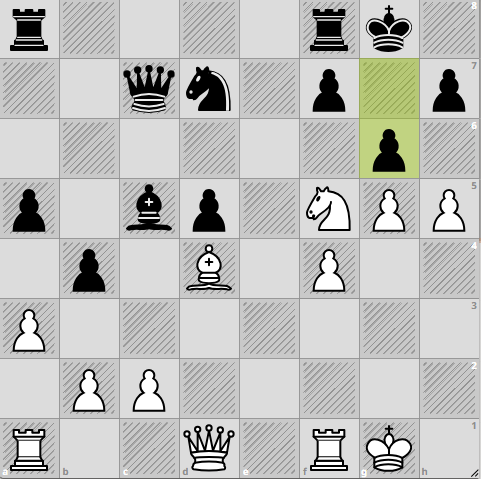
Take a deep breath, analyse your position and look for the best move in this puzzle.
Solution: If you noticed the checkmate in less then 15 seconds, then you passed this test. The correct move is Nh6# checkmate. Spending more time to find this checkmate is lack of pattern recognition.
Learning objective: If the solution seems hard, it indicates that you require more daily tactical practice. If you grasp it quickly, your tactical vision is getting better.
Test 2: Can You Think Ahead and Make a Plan
Now, let’s delve deeper into the game. This test assesses your calculation and planning skills. Reflect on your typical games: Do you make your moves quickly without much thinking Do you only calculate your move and disregard your opponent’s counter Do you experience sense of loss in the middle game If you often find yourself saying, “I didn’t see that move coming”, then your calculation ability is weak. Calculation does not imply thinking 10 moves ahead. Even being able to see 2-3 moves clearly is sufficient at many levels.
Puzzle Section 2
White to Play
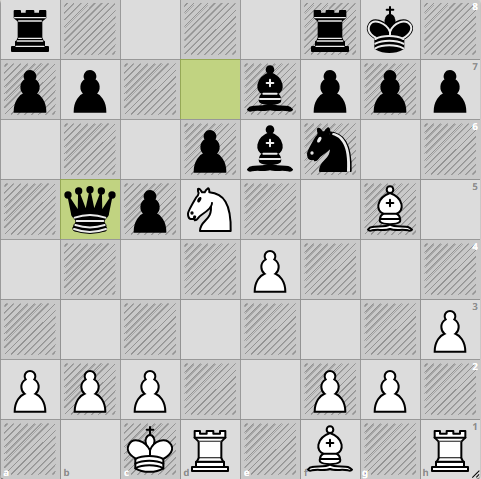
Let’s try to analyse the position first and then decide which move to play….
Solution: If you played Bxb5, then it’s a miscalculation since you have a better choice to play Nxe7+, because you first win a free bishop with a check, opponent’s king has to move, then you win the queen next.
Learning objective: If you have trouble picking between moves, then it’s time for you to slow down in your games and think in terms of plans rather than single moves.
Test 3: Can You Finish the Game Calmly
This last test evaluates two factors: the endgame skill and the mentality. Many players tend to get nervous once the queens are off. Some even make hasty moves because they want the game to end as soon as possible. Ask yourself the following:
- Do I get flustered in endgames?
- Do I allow winning positions to slip into draws or losses?
- Do I get angry or frustrated when I lose?
If your answer is yes, then this is a clear indication that you need to work on your endgame basics and strengthen your mindset. Endgames are patient ones. Knowing the rudimentary king and pawn endings, rook activity, and basic checkmates gives you assurance. Also, your mindset is crucial. Losing is inevitable in chess. The strong players will draw lessons from their losses instead of being afraid of them.
Puzzle Section 3
Black to Play
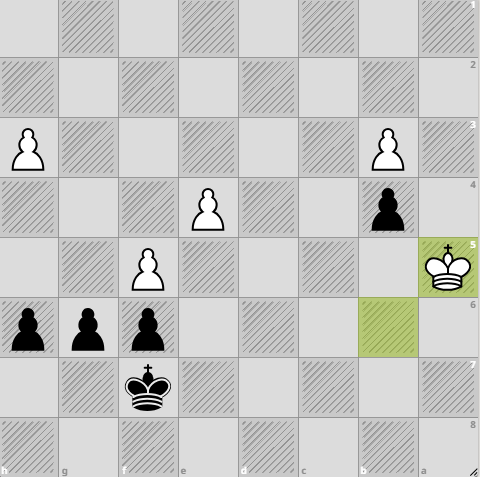
This is the final stage and most crucial part of the game. In the picture you can see it is a basic king pawn end game.
Solution: It looks like your opponent will definitely capture your b4 pawn so you should also capture f5 but it’s a blunder. Because these kinds of endgames are a race. Whoever promotes first, wins first and in our scenario, white has a strong pawn chain way to create a passed pawn with g5 and then h5 to dominate opponent’s h3 pawn and your opponent’s king has no time to save it or promote his own pawn.
Learning objective: If this puzzle feels uncomfortable, it means your endgame study will give you a quick improvement and more confidence.
Final Message
The purpose of this blog is very clear which is to point out the area where you are lacking so that you can determine what to work on next. Avoid trying to correct all your weaknesses at once. Work on one weakness and your overall performance will improve. Have a good time, savour the puzzles, and most of all. The New England Chess School is ready to tailor your skills and work on your weaknesses.