
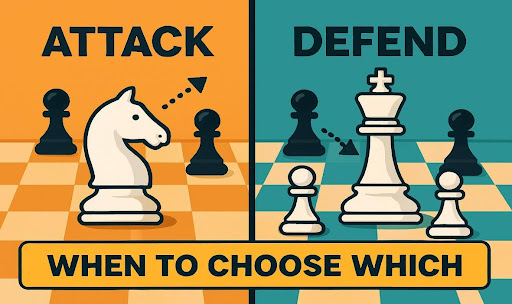
Well, as a beginner to intermediate player, you understand how pieces move and what objectives are required after in this game such as strategies, tactics etc. However, in this stage, what really needs to be balanced is attack vs defense. The trouble with being in this situation is it is easy to have tunnel vision, when you see a potential mate, or to play too scared when your opponent starts pushing pawns at your King.
Instead, you have to achieve the right balance between these two types of poker players and learn how to make “the big decisions.” This will enable you to move up in the rating rankings. Let’s look at how you can do
Evaluating the Board
After a few moves in the opening, you have to look at the board objectively. You are not just looking for a cool move, you are looking for who has the right to be aggressive. If your King is feeling a bit casual or your pieces are tripped over each other in the back, it is probably not the time to get aggressive.
On the flip side, if your pieces are active and your opponent’s King is stuck in the centre, you have a green light to start creating problems.
When to Pull the Trigger
A good attack isn’t just one piece flying across the board. It is a team effort. You know it is time to go on the offensive when:
- The King is Weak: Look for missing pawn shields or squares that your opponent cannot defend.
- You Have the Numbers: If you have more attackers in one area than they have defenders, that is your cue.
- The Lines are Open: If your Bishops and Rooks have long, clear paths to the enemy side, use them.
Defense is a Skill, Not a Weakness
A lot of intermediate players feel like they are losing if they have to defend. Actually, some of the best wins come from absorbing an opponent’s attack. If you can stop their flashy moves without losing material, they will often run out of steam and leave their own position full of loopholes.
The Decision Matrix: Attack or Defend?
Below is the example positions with best action that you can use in your game.
| If the Board Looks Like This… | Your Mindset Should Be… | The Best Action Is… |
|---|---|---|
| Opponent’s King has no pawn cover | Aggressive | Sacrifice or push pawns to open lines |
| Your King is feeling exposed | Proactive Defense | Retreat a piece or tuck the King away |
| You have better development than your opponent. | Urgent | Strike before they finish getting their pieces out |
| The position is closed and locked up. (Mostly in middlegame or endgames) | Patient | Manoeuvre your Knights to better outposts |
| You are up material (like a whole Rook) | Simplifying | Trade off pieces to reach an easy endgame |
The Value Check
In this stage, one must understand the exchange too. Of course, we all know the basic point value of the pieces, but let’s not forget that the real value depends on the board. A Knight is worth three pawns, but in a closed position where it can jump over all the pieces, it can be the most threatening piece on the board that you own. Never exchange active pieces for passive pieces even if the points are the same.
The Flip
And the best aspect of playing chess is the transition phase, as you spend five moves playing defensive moves impeccably, your opponent gets despondent, sacrificing their piece for maintaining this momentum, and just like that, there is a turnaround on the board. Now you are the one attacking their overextended forces.
Keep Practicing
The best way to get better at this is to review your games. Look at the moments where you launched an attack that failed, or where you defended when you should have been bold. Pattern recognition is everything. Keep following The New England Chess School for more interesting topics.