
Chess is not merely about making moves but it’s also about knowing when to ponder and when to go with instinct. If you’ve found yourself pondering over a chessboard while the clock ticks, deliberating over whether you should analyze a position for 20 minutes or simply make a move, then you know this choice is essential. Scientifically speaking, it has been proven that the decision to contemplate or not is equally crucial as the move itself.
Hikaru’s Unbelievable 68-Minute Think
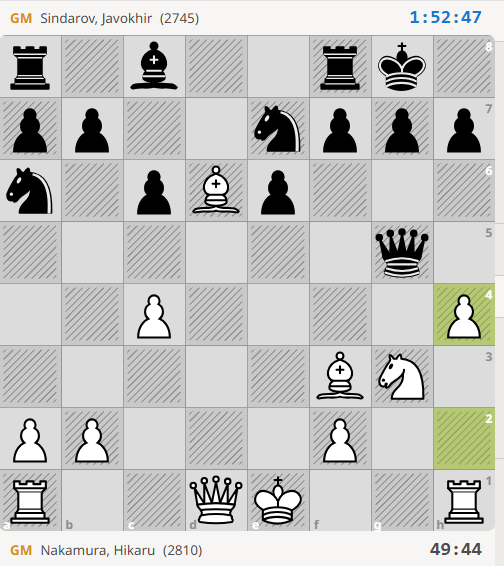
In the 2026 Candidates Tournament, Hikaru Nakamura thought for an astounding 68 minutes on one move against Javokhir Sindarov. That’s more time than some people take to decide on a dinner order!
Can you imagine the pressure? The silence from the commentators, the explosions of chatter from fans, Hikaru in deep concentration.
Did it work out? No, he made a mistake. However, the significance lies in the fact that Hikaru determined that the position was worthy of his 68-minute deliberation.
What is Engine Depth and How it Relates with Thinking – The Science Behind It
Some researchers studied 12 million online chess games with half a billion moves. They paired this with Stockfish engine depth analysis:
- Depth-1 search: quick glance, like “what’s the first move I see?”
- Depth-15 search: deep dive, exploring far more consequences. i.e., positional disadvantage.
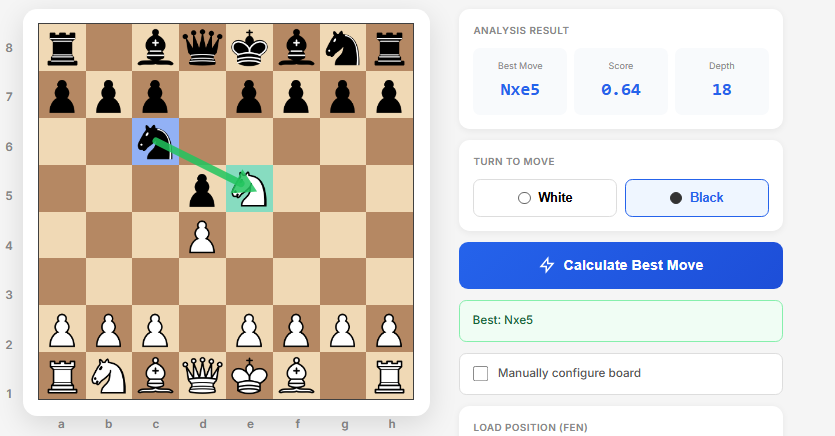
As seen in the image, according to specific parameters like the player’s turn and board situation, it shows the best move according to engine depth i.e. 18 in this case. The difference between these evaluations measured the value of thinking more. Sometimes deeper thought reveals hidden patterns, other times, it just confirms the obvious.
Time Control
How experienced players spend more time on moves that really require it. Time control makes all the difference.
- Bullet (1+0): It’s all about seconds. You need to calculate in advanced within a second. Bullet is also considered as a test to your cognitive skills rather than time.
- Blitz (5+0): More time to breathe, yet there’s pressure.
- Rapid (30+0 or 30+20): Thanks to increments, players gladly take as long as possible on challenging moves.
In this regard, ratings matter as well.
- Beginners (1000–1200 ELO): Waste time in simple positions, rush through tactical chaos.
- Experts (2000+ ELO): Even in Bullet, they allocate seconds strategically.
The Cost of Overthinking
Extended thinking has consequences:
- Clock cost: lose time.
- Energy cost: lengthy calculations take energy.
There must be a balance between costs and rewards. Hikaru’s extended thinking illustrates that even top-level chess requires careful weighing of pros and cons.
Lessons for Regular Chess Players
These are our key insights:
- Don’t waste time on simple moves. If shallow and deep searches agree, play.
- Conserve clock time for complex situations. Spend more time in tactical battles.
- Know your time limit. In blitz games, don’t get carried away. In rapid games, dive deeper.
- Develop intuition. Experienced players detect threats without lengthy calculations.
For example, in blitz play, your opponent sacrifices a knight. This is not the time for autopilot moves; this is the moment to calculate.
In chess, it’s not enough to find the best move. You need to manage time, energy, and critical thinking effectively. Top-level chess players have developed exceptional skills in this regard, but all chess players can practice metacognitive thinking.
The next time you find yourself lost in calculations, ask yourself if this worth an extensive calculation? Or should I make a quick move and conserve clock time?
Follow The New England Chess School for more researched base chess articles.