
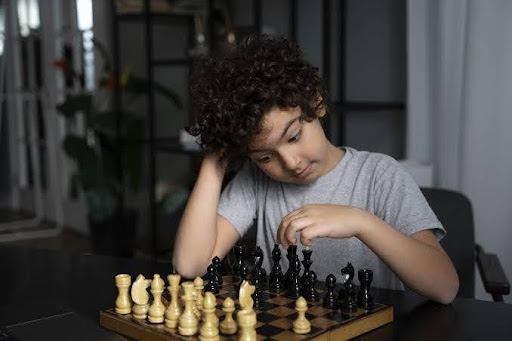
Most people associate ADHD gaming solutions with flashy lights and instant rewards, but could the solution be a 64-square game board instead? What if the tools to help your child improve concentration aren’t located on your smartphone, but in a chess set.
Many parents with children diagnosed with attention deficit hyperactivity disorder find it difficult to keep their children occupied. This is where chess has made its case. Parents have ranked this numerous century-old game as one of the best, if not the best, at developing concentration and self-control in children diagnosed with ADHD.
ADHD and the Game of Chess
Children diagnosed with ADHD also find it difficult to control their operating functions. This is where the diagnosis of ADHD stems from. Many people find it difficult to explain the diagnosis of ADHD, but the game of chess has simplified this issue.
- The Touch-Move Rule: Children, for example, may act impulsively. In chess, players may move a piece to an empty space in a hurry. Players must think about their piece’s future placement if the board is unobstructed.
- Sustained Attention: If a piece of chess is lost due to a momentary lapse in attention, your child has made a fun game of concentration to determine the survival of the game.
- Working Memory: Compared to all other games, chess has the most developed game play. Chess players must think all their moves and anticipate the other player’s future moves.
The Scientific Research
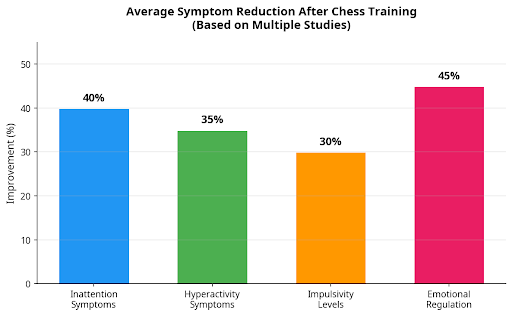
Scientists have put chess’ efficacy to the test by conducting various research studies. In 2023, researchers published a review in the Journal of Mind and Medical Sciences that covered twelve studies about chess and ADHD. The results showed that chess therapy is an effective technique for alleviating the symptoms of both hyperactivity and inattentiveness. The review indicates that chess therapy leads to better concentration, decreased impulsiveness, and increased attention span in the children.
Another interesting study researched the results of chess training in students from eleven to thirteen years old diagnosed with ADHD. Students were given structured lessons about chess and the results indicated that these lessons improved their concentration significantly in comparison to the control group. According to the authors of the study, chess training is a viable option for ADHD children.
Figure 1: Average symptom reduction after chess training based on multiple studies.
Beyond the Playing Field
The advantages of chess go well beyond beating an opponent. Children learn how to lose gracefully, gaining then the capacity to handle all future disappointments. They’ll realize that mistakes are not the end but rather a chance to come up with a better plan of action next time.
On top of that, chess can create social situations that don’t involve noisy chaos. This provides a structured form of interaction, which benefits those children who suffer from socialization problems. As stated by Upstep Academy, “Chess offers a way to connect with peers without the stress of social conversation”. [5]
What Parents Should Know About Chess
When helping your child with ADHD get into chess, you don’t have to be a grandmaster. You can begin by playing really short games that last only ten minutes. Instead of focusing on winning, pay attention to the fun aspect of the process. Praise your child for taking time to think about the move instead of winning only. Studies reveal that just 20 minutes of chess twice a week can yield positive results. Keep Following The New England Chess School for more informative blogs.
References
- [1] Agarwal, N. K., et al. (2023). Evaluating the Effectiveness of Chess as a Therapeutic Tool in the Comprehensive Management of ADHD. Journal of Mind and Medical Sciences, 10(2), 21.[cite: 2]
- [2] ElDaou, B. M. N., & El-Shamieh, S. I. (2015). The Effect of Playing Chess on the Concentration of ADHD Students in the 2nd Cycle. Procedia Social and Behavioral Sciences, 192, 638-643.[cite: 2]
- [3] Rodrigo-Yanguas, M., et al. (2023). Effectiveness of a Personalized, Chess-Based Training Serious Video Game in the Treatment of Adolescents and Young Adults With ADHD. JMIR Serious Games, 11, e39874.[cite: 2]
- [4] Rodrigo-Yanguas, M., et al. (2021). A Virtual Reality Serious Videogame Versus Online Chess Augmentation in Patients with ADHD. Games Health Journal, 10, 283-292.[cite: 2]
- [5] Upstep Academy. (2026). Chess for ADHD & Autism: Research-Backed Benefits for Neurodivergent Kids.[cite: 2]